
Your First Florida Fishing Charter: What to Know and Bring
Your First Day On The Water
Fish Florida's backwaters with a captain who loves beginners. Book today!
Published:
Updated:
Booking your first Florida fishing charter is exciting, and it is also a little nerve-racking if you have never held a rod on a boat. You do not need to know how to cast, tie a knot, or tell one fish from another. A good guide handles all of that, and your job is mostly to show up prepared and ready to enjoy yourself. This guide walks through what to bring, what to ask before you book, and what to expect so the day feels easy from the first minute.
Start With the Right Kind of Trip
Not every charter suits a beginner. Some trips are built around long runs and serious technique, while others are slower and more relaxed. For a first outing, a guided inshore trip is a sensible choice. Inshore fishing happens in calmer, sheltered water, which makes it easier on your stomach and easier to learn on. Captain Shane Dooley of Dooley Charters runs exactly this kind of trip, fishing the backwaters and mangroves of Florida's Gulf Coast with live bait, light tackle, or fly fishing depending on the conditions and what you want to try.
Light tackle matters more than it sounds. Lighter gear is easier for new anglers and kids to handle, and you can feel what is happening on the line instead of wrestling with heavy equipment. If you are bringing family along, pick a trip that says up front that beginners and children are welcome. Shane's trips do, and first-timers are a normal part of his day, not a surprise.
What to Bring on Your First Fishing Charter
The good news is that you do not have to show up with a pile of gear. Here is a simple checklist for a day on the water in Florida:
- Sun protection: a hat, sunglasses, and sunscreen. Water reflects the sun, so you get more of it than you expect.
- Polarized sunglasses if you have them, since they cut the glare and help you see into the water.
- Light, breathable clothing that covers your arms and shoulders, plus a light layer for the early morning.
- Non-marking, soft-soled shoes with good grip, because boat decks get wet.
- Drinking water, and a snack or lunch if your captain says you can bring your own.
- A small dry bag or waterproof pouch for your phone, keys, and wallet.
- A camera or phone for photos of your catch and the scenery.
- Any motion sickness medication you normally use, taken before you leave the dock.
Skip the fishing rods and tackle box. Shane's trips include the gear, so there is nothing to buy or rent beforehand. You also do not need a fishing license for his trips, which is one less thing to sort out before the day. Leave the stress at home and bring the sunscreen.
Questions to Ask Your Captain Before You Book
A few questions up front save you from surprises later. A good captain is happy to answer them, and the way they respond tells you a lot about how the day will go.
Ask how beginners and kids are handled on the boat. You want to hear that the captain is patient and willing to teach, not someone who expects you to already know what you are doing. Ask what the trip includes, so you know whether gear and bait are covered and what you should pack yourself. Ask how many people the boat takes, especially if you are planning a family or group outing, so everyone has room.
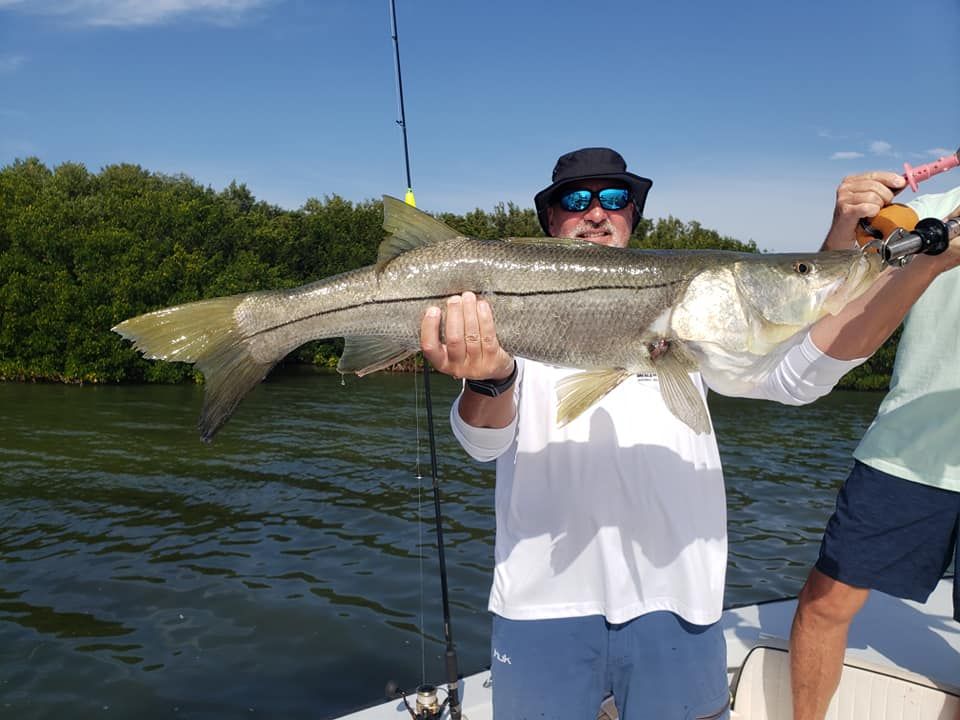
It also helps to ask about the weather plan, how the trip is likely to run on the day, and what the captain is hoping to target. Shane works the calm inshore waters around Pine Island Sound, Captiva Pass, Redfish Pass, and San Carlos Bay, and his targets include snook, redfish, spotted sea trout, tarpon, and sheepshead. Knowing roughly what you are chasing makes the day more fun, because you can watch for the signs along with the captain.
How a Patient Approach Helps First-Timers
The biggest worry most beginners have is looking silly. Nobody on a charter is judging how you cast. Early in the day, a good guide shows you the basics slowly: how to hold the rod, how to cast without tangling, and what to do when a fish bites. You learn by doing it, with someone right next to you who has seen every beginner mistake there is.
That patience is a big part of why Shane's trips work well for first-timers and families. When the pace is relaxed, kids stay interested and adults stop worrying about doing it wrong. You can ask a question, try again, and laugh about the one that got away. The fishing is the point, but the day is just as much about being outside together.
If you want to build on what you learn, some of Shane's trips focus on casting, live-bait rigging, and light-tackle technique with local guidance. That kind of trip is a good fit if you would rather leave the boat knowing how to do it yourself next time.
What to Expect on the Day
Plan to arrive a little early so you are not rushing. Your captain will go over the boat, a few safety basics, and the plan for the day. Then you head out onto the water and start fishing the mangrove edges and sheltered backwaters, using live bait, light tackle, or fly fishing depending on conditions and your preferences.
Expect some waiting. Fishing has quiet stretches, and that is normal, not a sign anything is going wrong. The tide, the weather, and the water all change what is biting and where. Use the slow moments to look around, take photos, and talk with your captain. Often the best part of the day is just being out in the backwaters with people you like.
Keep your expectations simple. You might catch a lot, a little, or something unexpected. Either way, a first trip with a patient guide is about learning what you enjoy and leaving with a story. Pack the basics, ask your questions, and let the captain handle the rest.
